

Background to our inline optical surface metrology instruments


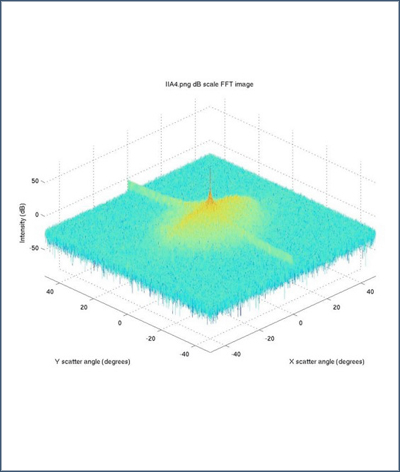
The QISAB technology traces its pedigree back to Very Long Baseline Interferometry (VLBI) in radio astronomy. Prof. Lars Bååth researched the inner structure of Quasi-Stellar Objects (QSO) with global interfeometer arrays at mm wavelengths. One of the telescopes used in such arrays was the 15m SEST telescope at La Silla, Chile (left image). The Point Spread Function (PSF) of the global array is shown in the mid figure. The PSF from VLBI can also be used to trace back the position, and changes thereof, of the array elements. The right figure shows the PSF calculated from the emission of a polished surface. The analogy between VLBI and the polished structure is that the points, the airy disc of the focal system, on the polished surface act like the antennae in the VLBI array.
The PSF can therefore be used in simliar manner to determine the statistical parameters of the array, a.k.a. the surface structure.
The research from Radioastronomy has now teamed with the research on machined surface by Prof. Bengt-Göran Rosén at Halmstad University to develop a new family of inline optical surface metrology instruments. QISAB is the spin-off company born to make the uniquely developed innovative technologies directly available to industrial processes.
